Our Diagnostics & Services
Seven ways to protect your
mission-critical infrastructure.
One independent, Swiss-based partner — from risk assessment to remediation. Defensible evidence for SLAs, hardware warranties, insurance and audit review.
01 · Test Kit · Corrosion Risk Assessment
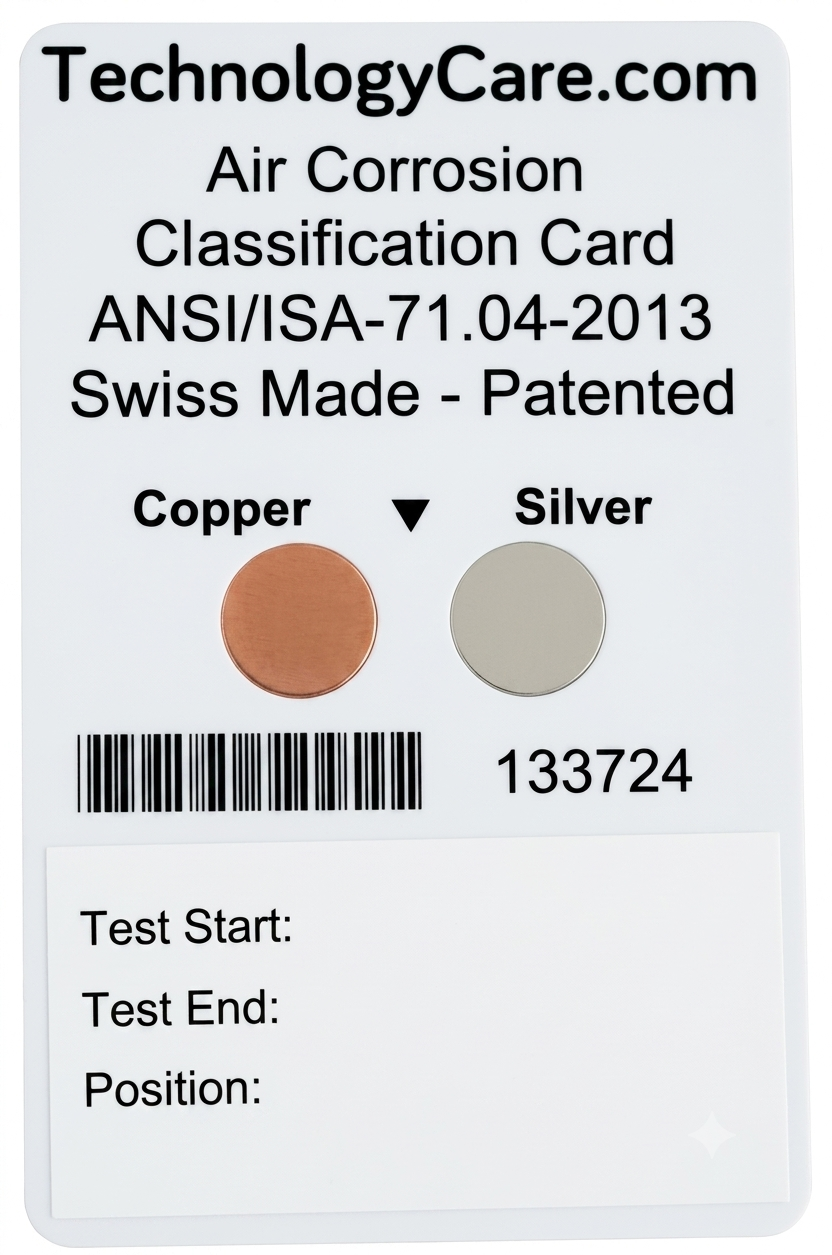
ANSI/ISA-71.04-2013 Corrosion Test
Protect server warranties against corrosive gases with 30-day ANSI/ISA compliance testing. Designed with dual silver and copper coupons representative of the equipment in your facility, this single-use test card measures the invisible gaseous contaminants that quietly degrade electronics. Place it in your target environment for 30 days, then return. You'll receive a certified laboratory report grading corrosion severity from G1 (Mild) to GX (Severe) — fully compliant with ANSI/ISA-71.04-2013, the standard referenced by major hardware warranties.
US$237.00 — complete kit & lab report
View Test Kit
02 · Test Kit · AirCheckup™
Visual Air Quality Control Card
Air quality at a glance, for up to one year
AirCheckup™ monitors data centers, server rooms, telecom sites, UPS and control rooms with two indicators: a particle surface (ISO 14644-1) and a copper corrosion coupon (ANSI/ISA-71.04). No power, wiring or calibration needed. Check it during routine walk-throughs, then return it at any time for a Swiss laboratory report per ASHRAE TC9.9.
US$187.00 — kit & lab report included
View AirCheckup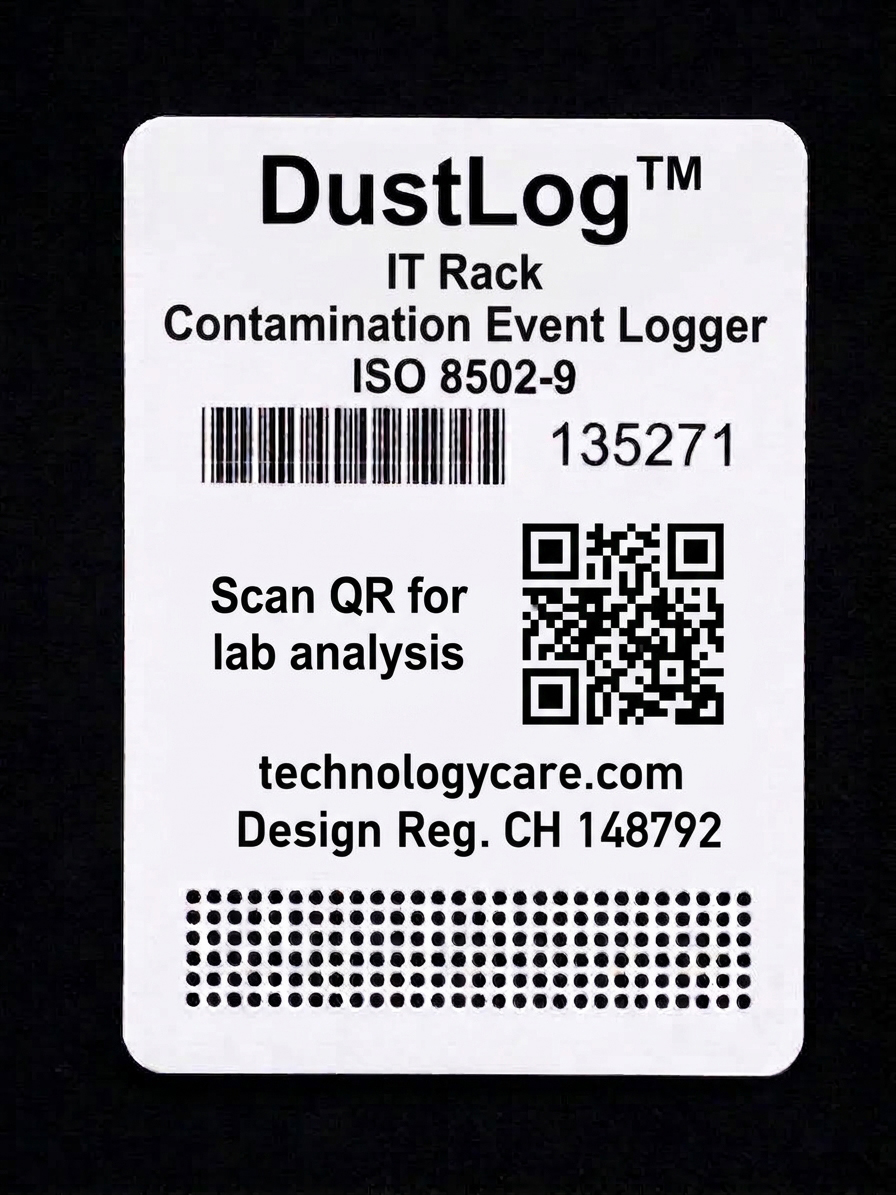
03 · Contamination Event Logger · DustLog™
A Contamination Event Logger for Racks & Rooms
Record the event — preserve the evidence
DustLog™ mounts in racks and on room surfaces and passively records chloride-laden dust for months or years. Whenever renovation work, smoke, an extinguishing gas release or a warranty dispute raises questions, simply scan the QR code and send it in. Our Swiss laboratory reports ionic contamination per ISO 8502-9 against the 5 µg/cm² data center limit, and air cleanliness per ISO 14644-1 (Class 8 for data centers).
Free for facilities & service providers — shipping included
Get Free DustLog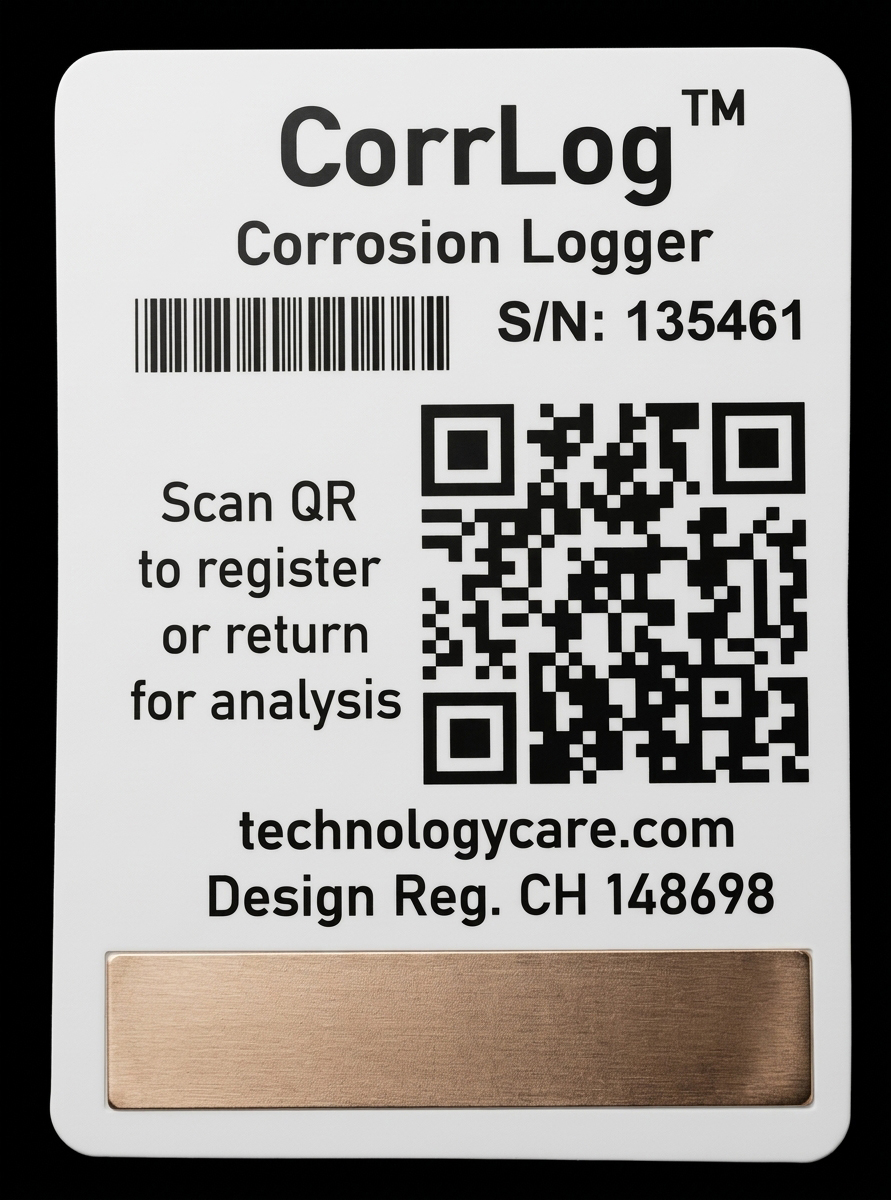
04 · Corrosion Logger · CorrLog™
Measure Today’s Corrosion. Reveal Tomorrow’s.
Actual and potential corrosion in one sampler
CorrLog™ measures actual corrosion on copper to ANSI/ISA-71.04 (data center target G1: below 300 Å/month) plus the hidden chloride load that turns corrosive in the next humidity spike. Passive, no power, registered by QR scan and analyzed by our Swiss laboratory.
Free for facilities & service providers — shipping included
Get Free CorrLog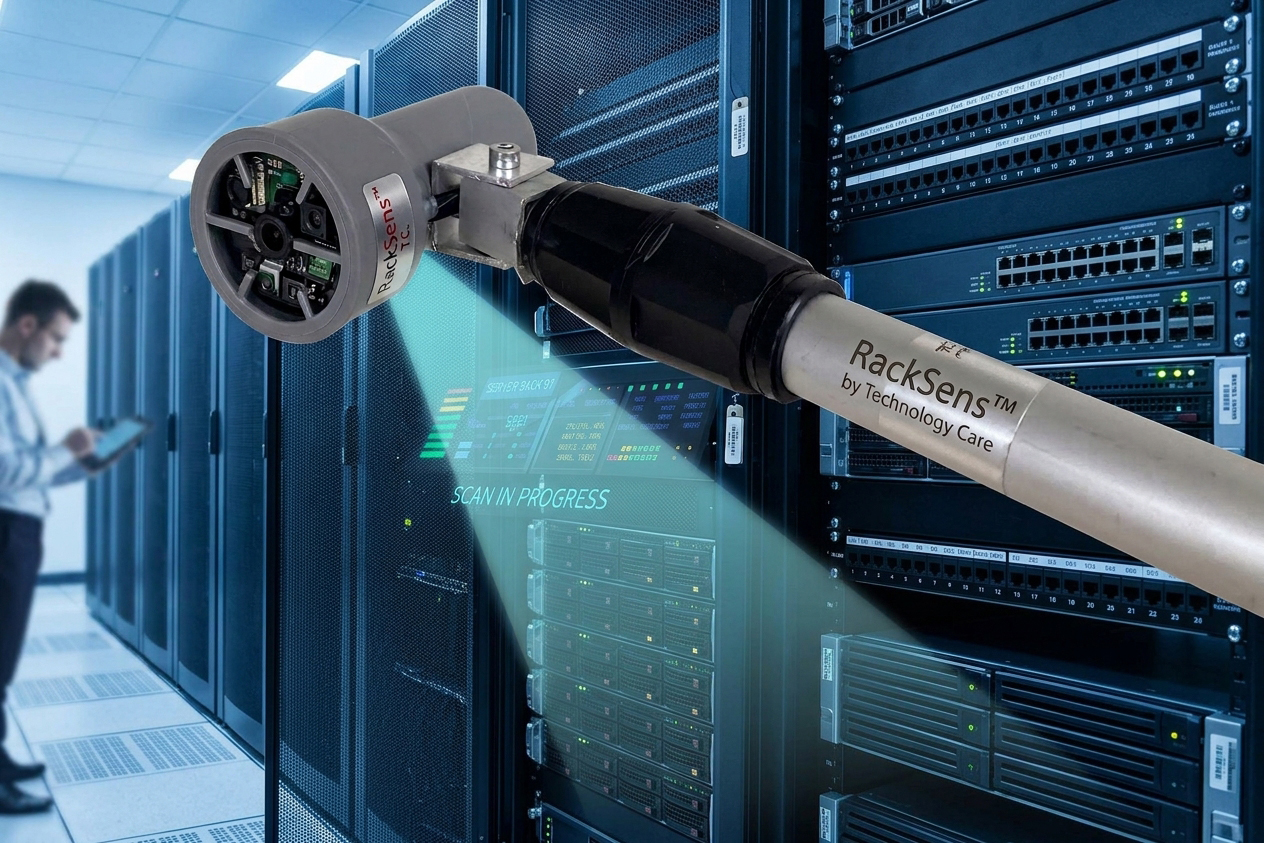
05 · On-Site Service · Linear Rack Scanning
RackSens™ Server Scanning
Like a CT Scan for Your Racks
RackSens™ scans both the inlet and exhaust of every rack, capturing thermal, humidity, infrared, and e-nose readings to catch hotspots, corrosion risks, and failing components long before fixed sensors would notice.
Explore RackSens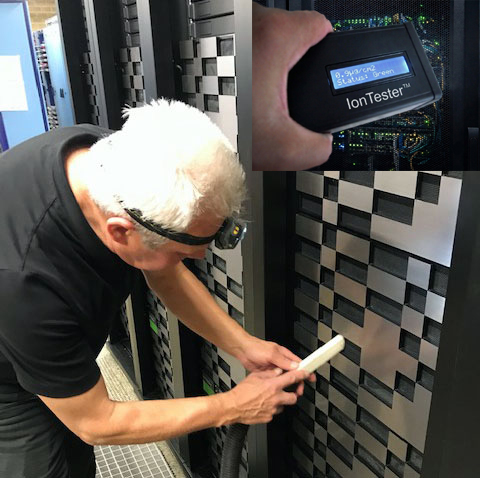
06 · On-Site Service · Submicron Cleaning
Submicron Data Center Cleaning
Eliminate microscopic conductive dust before it causes failures. We use ion-active systems to safely remove submicron particle contamination from data center floors, subfloors, racks and equipment surfaces. Every job is backed by certified air and surface cleanliness testing.
Cleaning Services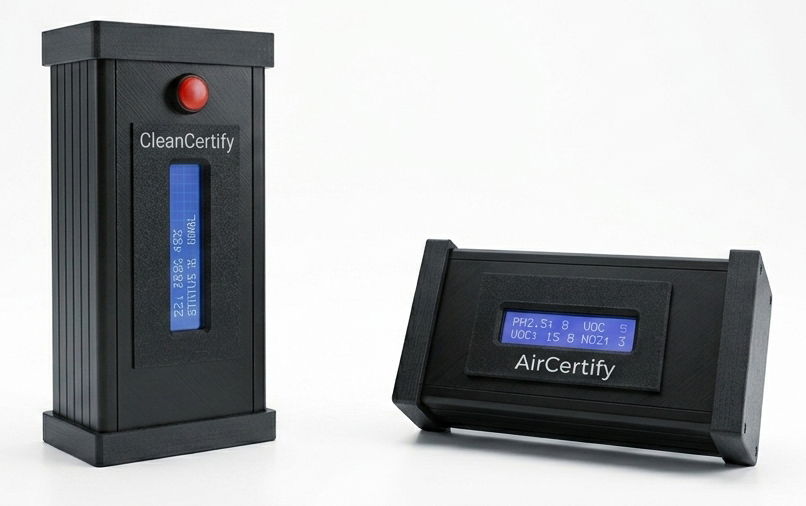
07 · Audit · Environmental Compliance
Air and Hygiene Certification
It has never been easier to get independent, third-party certification of the cleanliness and air quality of your facility. Technology Care provides calibrated, automated measuring instruments directly to facilities and facility service providers. Every measurement is encrypted at the point of capture, processed independently in our Switzerland laboratory, and issued as a third-party certified lab report—with live readings on the instrument’s own LCD screen at every step.
Certification Details