Swiss-Owned & Operated · Zurich
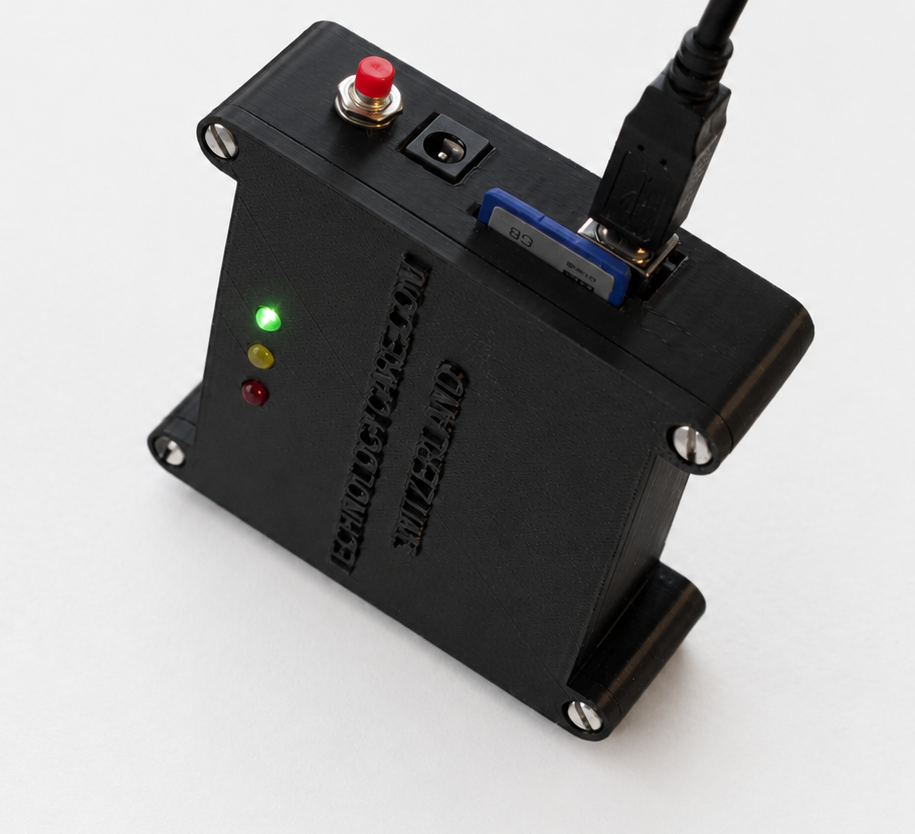
Working with partner companies worldwide, we certify the cleanliness of data centers across the globe. Before and after cleaning, our partners measure surface cleanliness against NADCA ACR, the US standard for ventilation ducts, which counts a surface as clean below 0.75 mg/100 cm² (about 75 mg/m²). Not all dust is the same: some is benign, some is corrosive. Our partners take samples of the dust found in the data center, and the DustTrace™ conductometer measures its conductivity to show which type it is. A red LED means the dust was conductive (above 10 µS), so it contains components that absorb moisture and would act corrosively. Depending on the type of dust, the cleaning method is customized. The encrypted data is analysed in Switzerland and you receive a certified CleanCertify™ report — so every job is documented, not just inspected.
DustTrace™ & IonClean™ · Comprehensive Surface Hygiene
A data center can look spotless and still carry submicron dust and ionic residues that the eye can’t see. Our partners use two DustTrace™ units on site, before and after every cleaning, so the result is proven by numbers — and certified in a CleanCertify™ report.
Uses a controlled pulse of air pressure to lift settled dust from the surface and measure it against the NADCA ACR benchmark for a clean surface: below 0.75 mg/100 cm² (about 75 mg/m²).
Measures the conductivity of the removed dust in µS. Dust above 10 µS is classed as corrosive, and a red LED shows the result on site.
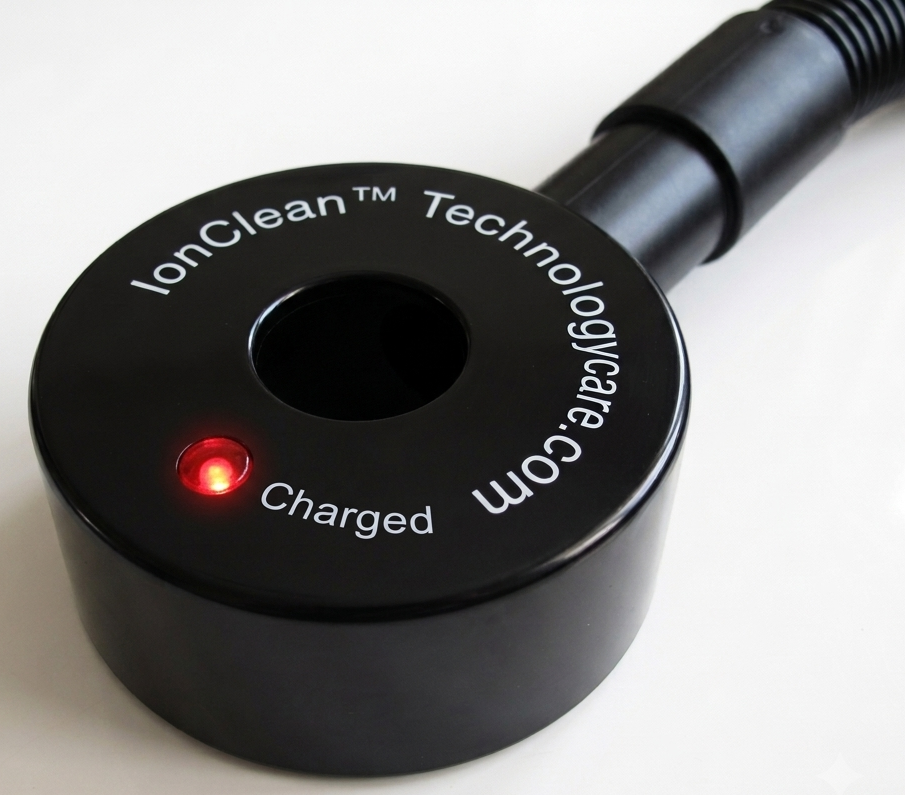
Standard cleaning fails because submicron particles cling to surfaces through electrostatic attraction. Our proprietary IonClean™ system actively charges its brushes to deliver targeted ions on contact — breaking this static bond so microscopic contamination can be lifted off and removed.
Definition · Settled dust
Settled dust is airborne dust that has dropped out of suspension and rests loosely on server rack top covers, PCB circuit boards, cable trays or floor tiles. Because it is only loosely held, it easily becomes airborne again through air movement, foot traffic or work in the data hall.
Definition · Ionic contamination
Ionic contamination is soluble salts and ionic residues on a surface. It is invisible to the eye, even on surfaces that look spotless. At around 57% relative humidity these salts turn deliquescent: they absorb moisture from the air, become electrically conductive and start to corrode contacts, connectors and circuit boards.
NADCA ACR
Settled dust measured against the NADCA ACR benchmark: a surface counts as clean below about 75 mg/m².
Conductivity · µS
Soluble salts and ionic residues measured by conductivity in µS. Dust above 10 µS is classed as corrosive.
ISO 14644-13
Both units measure floors, racks and equipment before and after cleaning, to assess cleaning success per ISO 14644-13.
What We Measure
Benign dust and corrosive dust call for different cleaning. DustTrace™ measures how much dust there is and whether it is corrosive, so the cleaning method can be matched to the dust — and checked again afterwards.
Settled Dust · DustTrace™ Particle
< 75mg/m²
NADCA ACR
A surface counts as clean below 0.75 mg/100 cm² (about 75 mg/m²) under NADCA ACR. DustTrace™ Particle shows whether your surfaces meet it.
Ionic Contamination · DustTrace™ Ionic
> 10µS
Corrosive dust
Dust with a conductivity above 10 µS is classed as corrosive. DustTrace™ Ionic measures it surface by surface.
Both results are documented in one certified CleanCertify™ report as cleaning success per ISO 14644-13.
Why Surfaces Matter
A data hall can pass an air-quality test on the day it is tested and still be contaminated. Air counts are a snapshot. Settled dust resting on floors, subfloors, cable trays and equipment is not counted — until it becomes airborne.
Air counts also say nothing about ionic contamination. Soluble salts and ionic residues stay invisible on surfaces that look spotless, until humidity reaches around 57% and they absorb moisture, become conductive and corrode the hardware — which is why DustTrace™ flags dust above 10 µS as corrosive.
This is a growing problem in new hyperscale and AI data centers. Construction dust settles into every surface before go-live, and dense GPU racks move enormous volumes of air through the hall. Clean air can turn contaminated in moments when surfaces are not clean too.
That is why both DustTrace™ units measure before and after cleaning, and why every CleanCertify™ report references NADCA ACR, ISO 14644-13 and the 10 µS corrosive-dust threshold.
What puts settled dust back into the air
High-volume cooling airflow and pressure changes lift loose dust from floors, subfloors and overhead surfaces.
A gas dump, even without a fire, releases a sudden blast of air that stirs up settled dust across the whole room.
Construction, cabling and equipment moves both create new dust and disturb dust already present.
Cleaning with the wrong protocols and equipment can spread contamination and make it airborne rather than remove it.
How Certification Works
We work with cleaning partners worldwide. They measure with both DustTrace™ units, and we independently certify the result as a CleanCertify™ report.
A Technology Care partner takes dust samples and measures them with DustTrace™ to tell benign from corrosive dust, cleans with the method suited to that dust, then measures again.
The measurement data from both units is encrypted and transferred to our laboratory in Switzerland, where it is analysed.
You receive a certified CleanCertify™ report documenting cleaning success per ISO 14644-13, with results against NADCA ACR (about 75 mg/m²) and the 10 µS corrosive-dust threshold.
For Cleaning Companies
Data center operators can’t see submicron dust or ionic contamination — so on looks alone they can’t tell a specialist from a janitorial crew. IonClean™ lets you remove what standard methods leave behind, DustTrace™ proves it in numbers, and a CleanCertify™ report turns that proof into something you can sell.
Operators need evidence of clean surfaces and dust below the 10 µS corrosive threshold. Certified, standards-referenced results qualify you for specialist data center work that uncertified cleaners can’t prove they can deliver.
Before-and-after measurement and a certified CleanCertify™ report are a deliverable in their own right — one you can price on top of the cleaning itself.
A before-measurement shows the customer in black and white where surfaces fail. The data justifies the cleaning scope — and periodic re-measurement creates recurring work.
Ionic decontamination after a fire-suppression discharge, construction-dust removal before hyperscale and AI go-live, critical-environment maintenance — work that pays for specialist equipment and skills.
Run a cleaning company? Find out how DustTrace™ and IonClean™ can add certified data center services to your business.
Become a Partner →Get Started
Operating a data center? Tell us about your facility and we’ll connect you with a certified cleaning partner. Running a cleaning company? Talk to us about adding DustTrace™ and IonClean™ to your services — backed by certified CleanCertify™ reports from our laboratory in Switzerland.
Reach out for a free quote, or contact us directly with your requirements.
Contact Us →