Our Services
Five ways we protect
your data center environment.
One independent, Swiss-based partner — from risk assessment to remediation. Every report defensible for due diligence, SLA, warranty and insurance review.
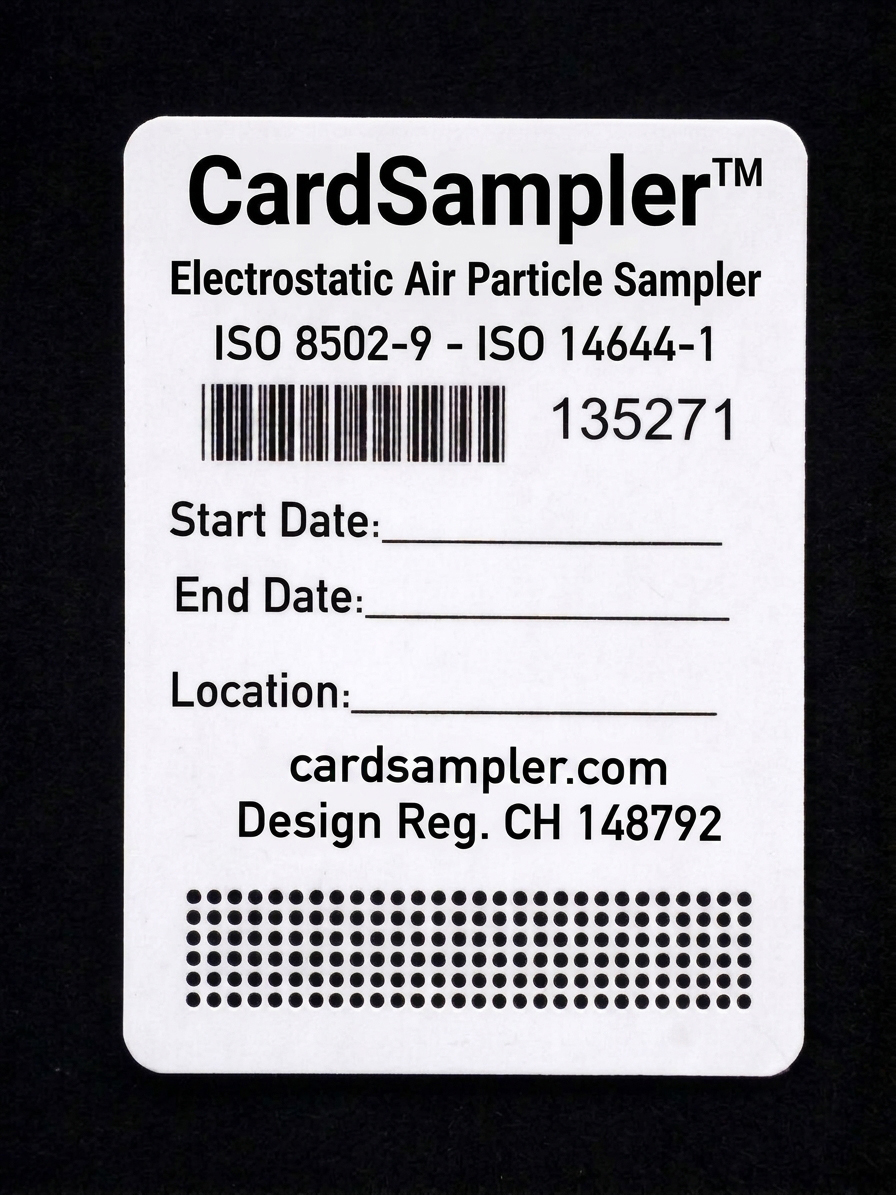
01 · Free Partner Program · CardSampler™
Free Air Particle Samplers For Your Service Team
We supply CardSampler™ electrostatic air particle samplers free of charge to FM, cleaning, HVAC and property management companies. Your technicians mount them on server racks and HVAC returns during routine visits — the electrostatic grid captures fine, submicron and ultrafine particulate that filters and wall sensors miss. When a client needs independent verification, send the card to our Swiss lab for a certified ISO 14644-1 / ISO 8502-9 report: you bill a premium diagnostic fee, we charge only a low wholesale partner rate.
Learn more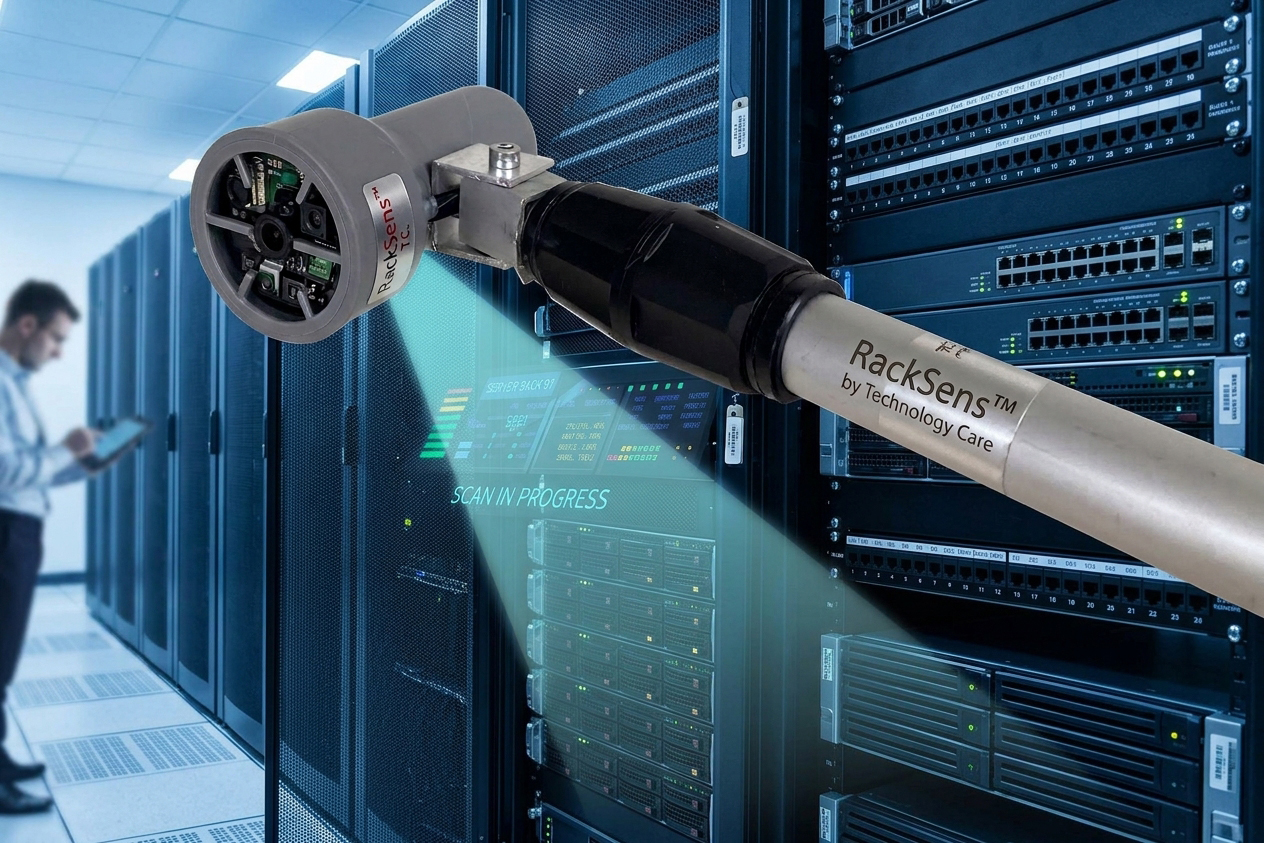
02 · On-Site Service · Linear Rack Scanning
RackSens™ Linear Microclimate Profiling
Three sensors, one fast pass, zero blind spots. RackSens™ sweeps the full length of a rack row to capture thermal and humidity readings at every inlet and e-nose gas-outgassing readings at every exhaust — catching hotspots, corrosion risk, and failing components long before fixed sensors would notice.
Learn more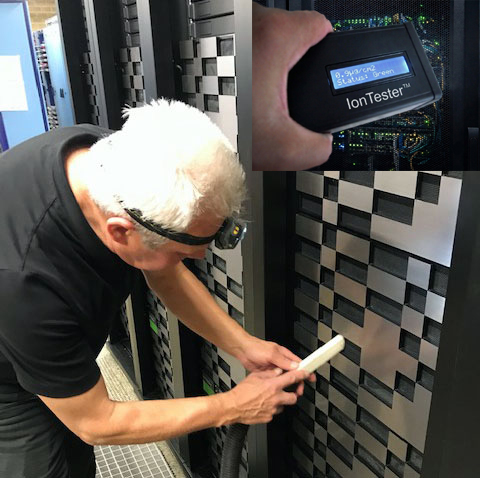
03 · On-Site Service · Submicron Cleaning
Submicron Data Center Cleaning
We use ion-active systems to safely remove submicron particle contamination from data center floors, subfloors, racks and equipment surfaces. Every job is backed by certified air and surface cleanliness testing.
Learn more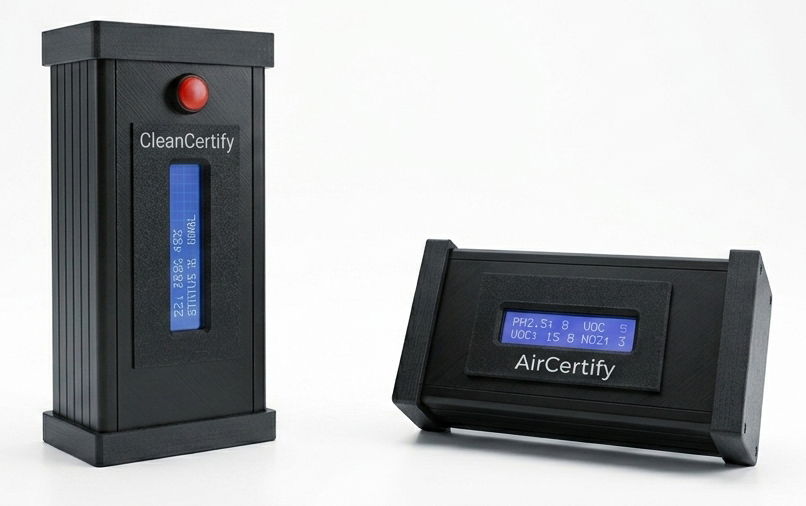
04 · Audit · Environmental Compliance
Air and Hygiene Certification
It has never been easier to get independent, third-party certification of the cleanliness and air quality of your facility. Technology Care provides calibrated, automated measuring instruments directly to facilities and facility service providers. Every measurement is encrypted at the point of capture, processed independently in our Switzerland laboratory, and issued as a third-party certified lab report—with live readings on the instrument’s own LCD screen at every step.
Learn more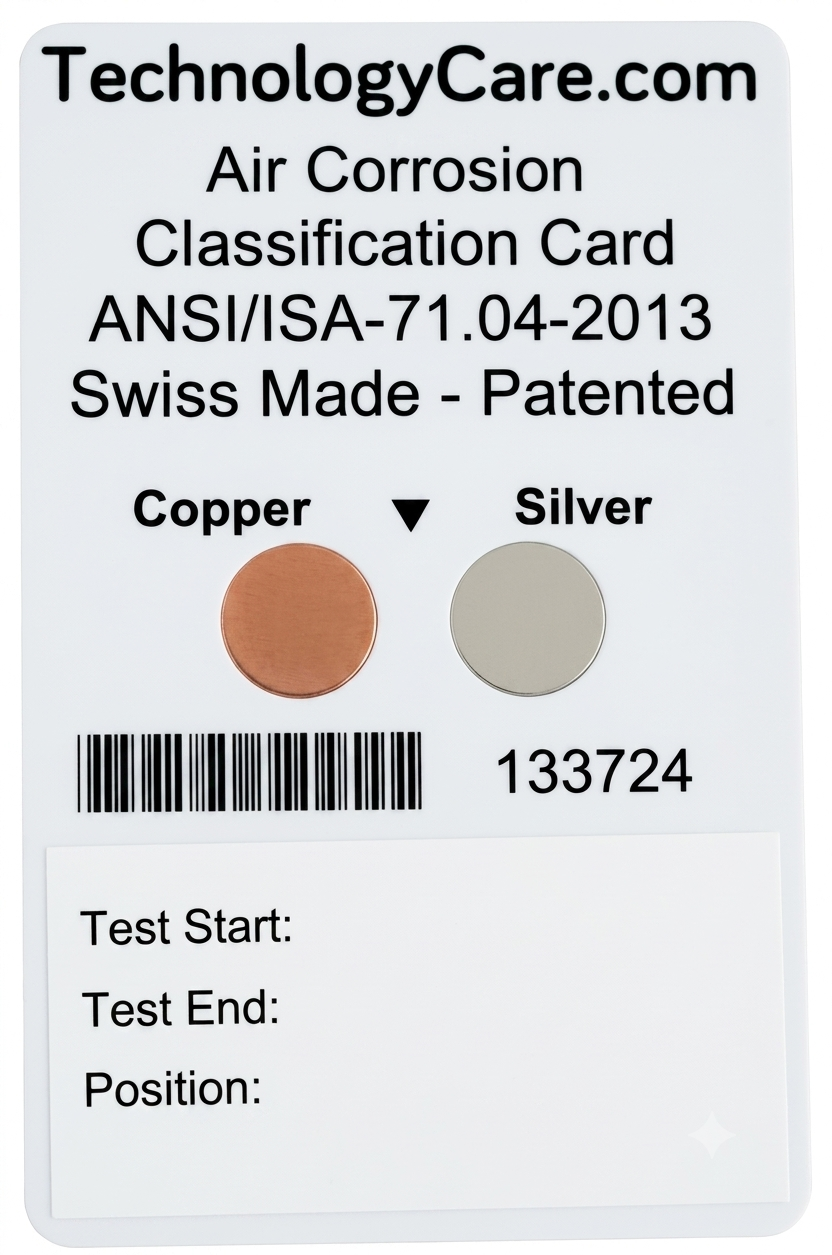
05 · Test Kit · Corrosion Risk Assessment
ANSI/ISA-71.04-2013 Corrosion Test
Protect your hardware with 30-day ISO & ISA compliance testing. Designed with dual silver and copper coupons representative of the equipment in your facility, this single-use test card measures the invisible gaseous contaminants that quietly degrade electronics. Place it in your target environment for 30 days, then return. You'll receive a certified laboratory report grading corrosion severity from G1 (Mild) to GX (Severe) — fully compliant with ANSI/ISA-71.04-2013, the standard referenced by major hardware warranties.
US$237.00 — complete kit & lab report
Learn more