Is Your Indoor Air
Making You Ill?
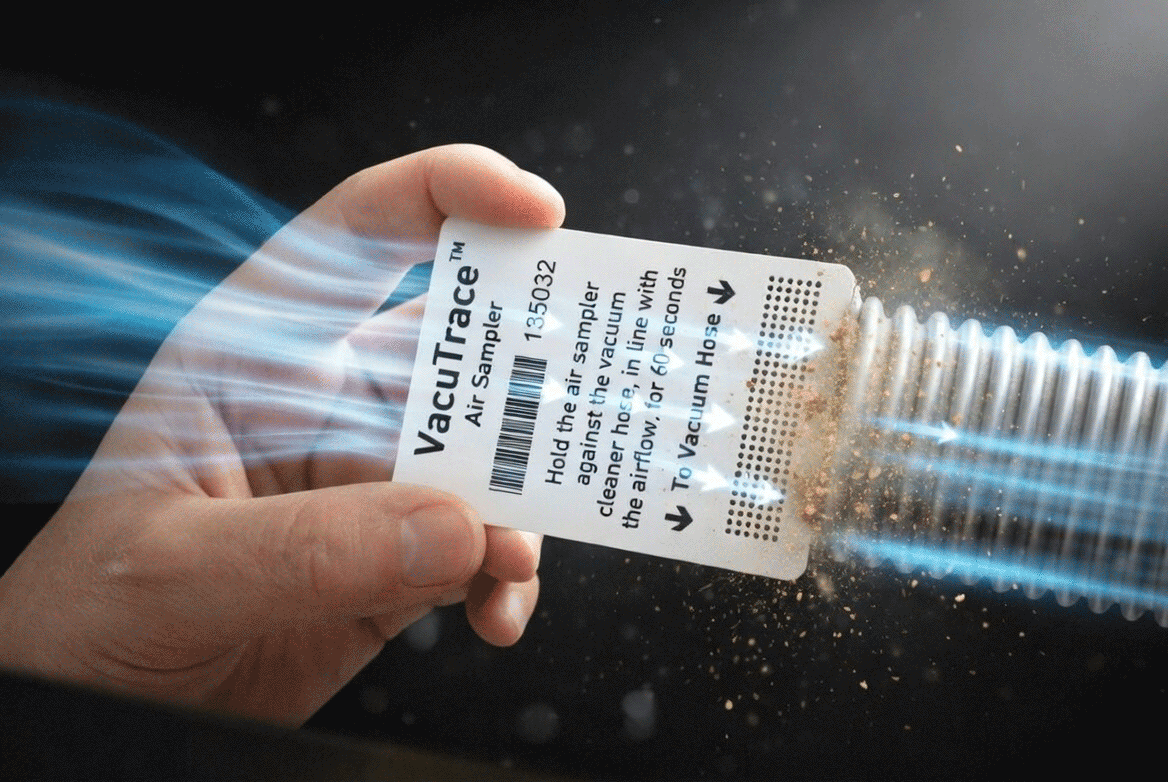
Sick Building Syndrome affects millions of people in homes and workplaces worldwide. Bioaccessible toxins — chemicals readily absorbed by the body through inhalation or skin contact — accumulate invisibly in indoor air and dust. VacuTrace™ identifies these contaminants with certified lab analysis, in three simple steps, using nothing more than your vacuum cleaner.

Everything Included —
No Hidden Costs
One kit covers homes, offices, and schools. Price includes worldwide priority shipping, prepaid return postage, and a certified expert lab report.
- Quantitative lab analysis of bioaccessible ionic contaminants
- Chloride, nitrate, sulfate — from outdoor pollution & traffic
- Ammonium compounds — from cleaning agents
- Sodium, potassium, calcium, magnesium
- Acidic / alkaline residues from building materials & processes
- 1 × VacuTrace™ Sampler
- Step-by-step instructions
- Certified lab analysis & digital report
- International prepaid return mailer
- International Priority Post shipping
Secure payment via PayPal · No account required
Who Is VacuTrace™ For?
Anywhere people breathe, clean, or rely on equipment — ionic air quality matters.
Homeowners & Renters
Unexplained headaches, fatigue, or persistent respiratory symptoms at home? Bioaccessible toxins from traffic pollution, cleaning products, and building materials accumulate in household air and dust — and are readily absorbed through inhalation or skin contact.
- Persistent allergy or respiratory symptoms
- Unexplained fatigue, headaches, or skin irritation
- After renovation or flood damage
- Pre-purchase due diligence
Offices & Workplaces
Sick Building Syndrome is a recognised occupational health concern. Staff experiencing persistent headaches, fatigue, or respiratory irritation that improves when they leave the building may be affected by bioaccessible airborne toxins absorbed through inhalation or skin contact.
- Staff reporting headaches or irritation
- Symptoms that improve away from the building
- Post-refurbishment air quality checks
- Compliance & duty-of-care documentation
How VacuTrace™ Works
Three simple steps — from sample collection to results in your inbox.
Collect Sample
Use the patented card-sized sampler with any vacuum cleaner — takes only 60 seconds. No special skills needed.
View InstructionsMail It Back
Place the sampler in the prepaid return envelope included in your kit and drop it in any mailbox — worldwide return postage covered.
Get Your Results
Receive your detailed digital lab report by email — usually within a few working days of the lab receiving your sample.
View Sample ReportSick Building Syndrome & Bioaccessible Toxins
Sick Building Syndrome (SBS) describes a pattern of symptoms — headaches, fatigue, eye and throat irritation, skin reactions — that occupants experience inside a building and that typically ease once they leave.
A key driver is bioaccessible ionic contamination: microscopic chemical residues in air and dust that are readily absorbed by the body through inhalation or skin contact, often without any visible sign of a problem.
-
Skin & respiratory absorption
Bioaccessible residues in settled dust are absorbed through skin contact and inhalation — especially during cleaning, when particles are disturbed and become airborne.
-
Sick Building Syndrome
Headaches, fatigue, and respiratory irritation linked to time spent indoors — a recognised occupational and residential health concern.
-
Microbial growth
Promotes bacteria, mold, and biofilm development in moist environments.
-
Bioaccessible toxin absorption
Ionic chemical residues are readily absorbed by the body through inhalation or skin contact, entering the bloodstream without obvious symptoms.
-
Chronic low-level exposure
Prolonged daily exposure to low concentrations of ionic toxins — common in poorly ventilated spaces — can contribute to cumulative health effects over time.