Data center corrosion monitoring
Corrosion is one of the leading hidden causes of unplanned downtime and expensive hardware failures. Our professional monitoring and testing services help operators detect corrosive risks early — before they damage servers, storage systems or networking equipment.
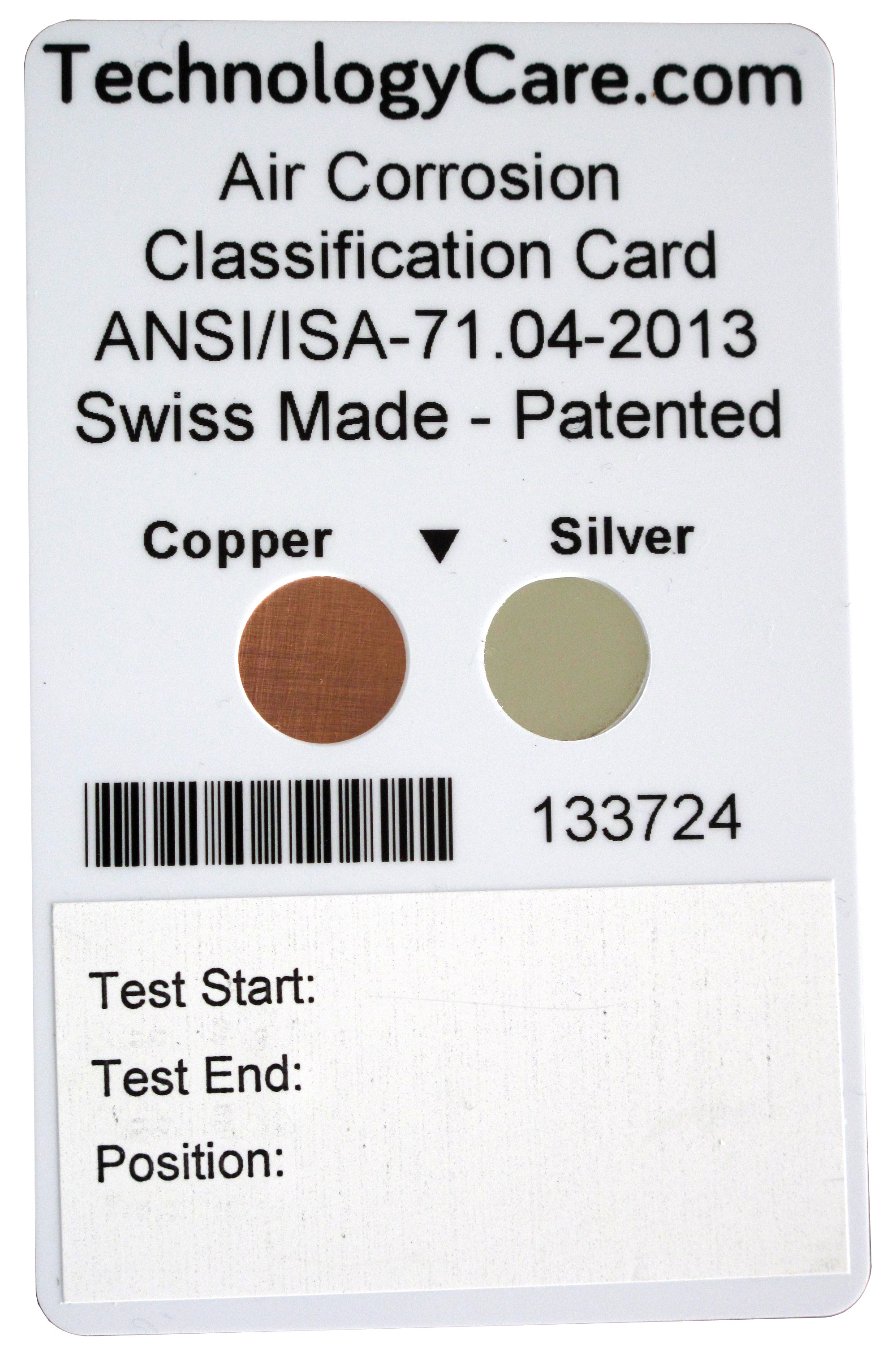
30-day ANSI/ISA-71.04 corrosion test
Copper and silver corrosion coupons deployed over 30 days, with a prepaid international return mailer for lab analysis. Results are classified on the industry-standard G1–GX severity scale — essential for warranty compliance and infrastructure risk assessment.
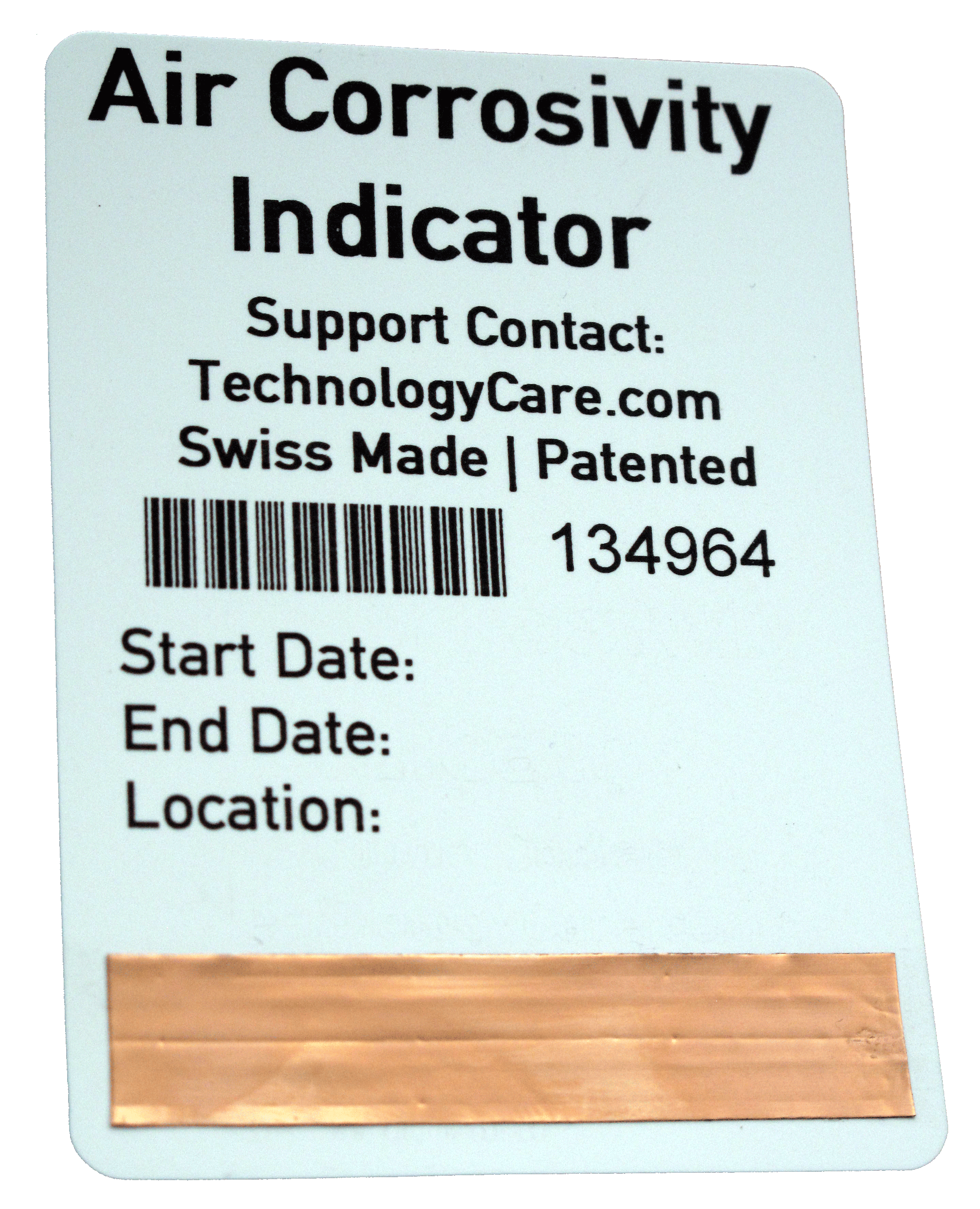
Corrosion indicator card
A pure copper reactivity strip that darkens visibly on exposure to corrosive gases or particles, providing an immediate visual alert. Suitable for ongoing corrosivity monitoring, with a prepaid international return mailer for lab analysis. Test results are benchmarked against ANSI/ISA-71.04 Level G1.
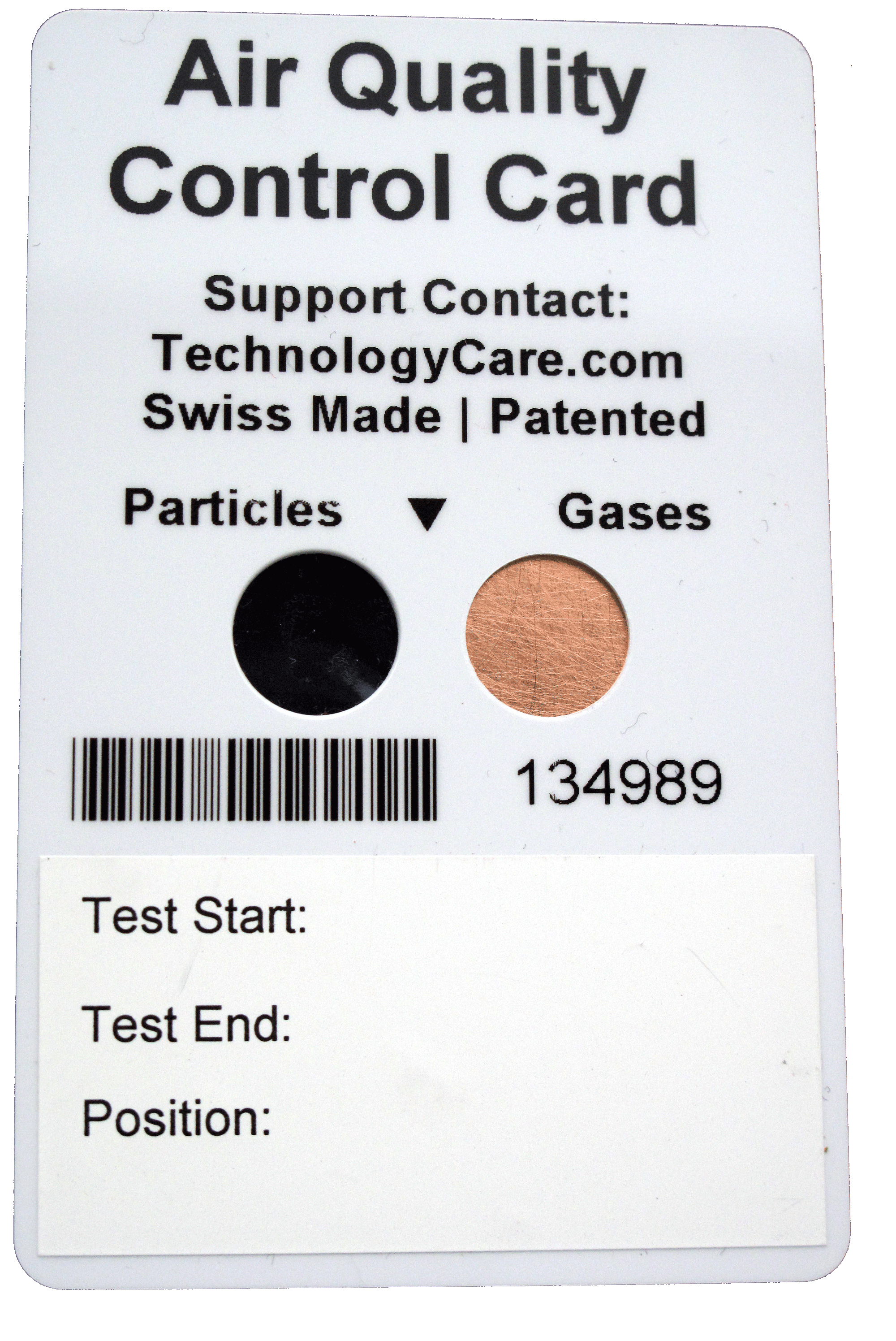
Air quality control card
A combined copper reactivity coupon and particle collection sampler in a single unit. Includes prepaid international return mailer for full laboratory analysis, benchmarked against standards for mission-critical facilities.